When Digital Stops Being a Place and Becomes a Lifeform
There was a time when simply existing online felt like a significant achievement. A business would launch a website, open a social page, add a customer form or a chatbot, and proudly declare itself digital. It was a simpler digital era, an era where having presence felt like victory. But presence is no longer the prize. The internet has evolved beyond being a tool or a destination; it has become an atmosphere, a dimension, a breathing environment where businesses must not only appear but exist intelligently.
Customers do not land on websites hoping for information; they arrive expecting an experience. They do not ask companies to respond; they assume the brand already understands their needs, recognizes their preferences, remembers their history, and anticipates their next step before they take it.
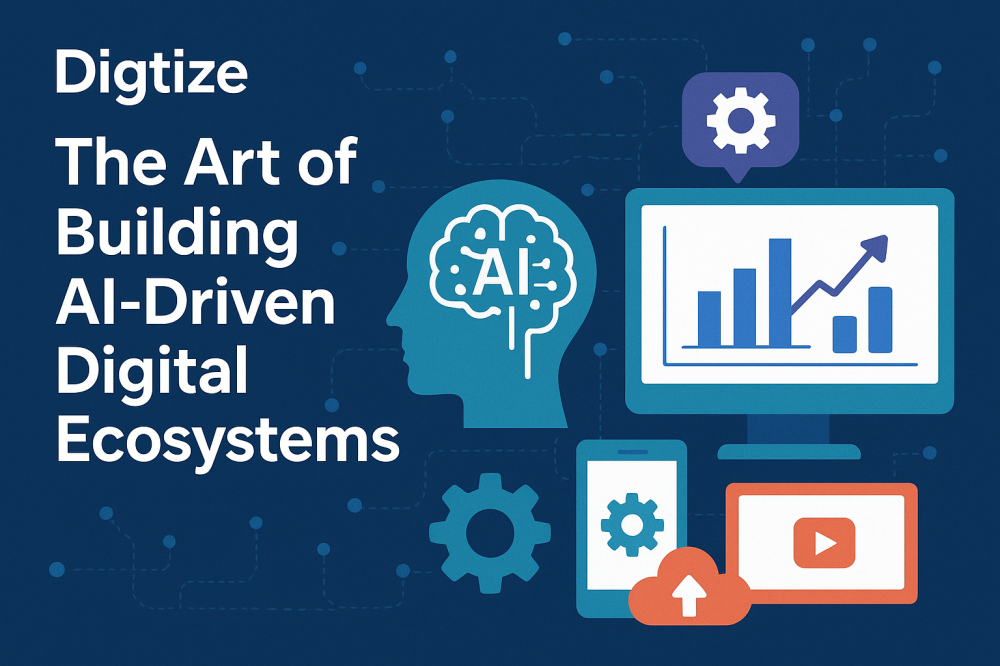
This shift has quietly rewritten the rules of modern business. A digital presence is no longer enough; software alone is not strategy, automation alone is not innovation, and technology alone is not intelligence. True evolution now lies in building AI-driven ecosystems, environments where every digital component communicates, learns, responds, and grows.
In this world, thriving businesses are not the ones with the most tools, but the ones whose systems behave almost like living organisms: sensing, processing, adapting, strengthening, remembering, and improving with every interaction. That is not a dashboard; that is a digital nervous system. That is not a brand; it is a digital organism powered by intelligence.
And so, the modern question is no longer “Is your business online?” but “Is your digital ecosystem alive?”
When Systems Think Instead of Waiting
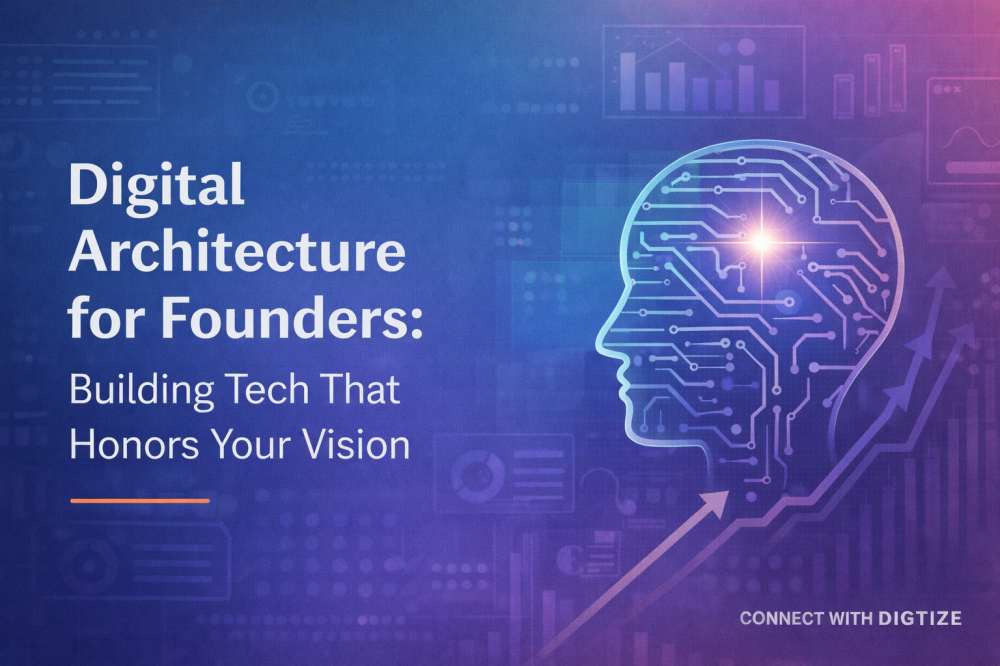
A true AI-driven ecosystem does not resemble a stack of apps or a list of tools scattered across departments. It feels more like a brain, a network of connective tissue where data flows like signals, memory strengthens with repetition, and every action informs the next. In these systems, technology is not waiting for instruction; it is responding to context, learning from behaviour, and adjusting its behaviour in real time.
The CRM does not simply store entries; it recognizes patterns, observes engagement rhythms, and predicts which prospects are warming and which are fading. A chatbot does not reset its personality with each conversation; it refines its tone, becomes more human with every interaction, and learns how empathy shapes satisfaction. Analytics platforms do not simply report numbers; they forecast demand, reveal hidden opportunities, and guide decision-makers toward precision rather than guesswork.
In traditional systems, technology was reactive; it responded because it had to. In intelligent ecosystems, technology becomes predictive; it responds because the moment demands it. The ecosystem becomes aware. It notices hesitation and provides clarity. It senses urgency and accelerates delivery. It detects dissatisfaction in the tone and offers reassurance before frustration grows. It does not simply automate tasks; it amplifies intelligence, transforming raw data into insight, insight into action, and action into progress.
Yet, even amid all this technological brilliance, something beautifully human remains essential: vision. Machines can recognize emotions, but they do not feel it. They can identify opportunities, but they do not dream. They can mimic creativity, but they cannot bear the meaning. AI becomes the engine, but humanity remains the architect. The most powerful businesses are not those that remove the human element, but those that combine human imagination with machine precision, where intuition and intelligence work hand-in-hand, where empathy drives interaction and automation expands capability, where technology does not replace the human touch but frees it to do its highest work.
This is the future: not businesses run by machines, but businesses guided by humans, powered by intelligence, and remembered for their experience.
How Intelligent Ecosystems Are Built
An AI-driven ecosystem does not begin with selecting tools; it begins with choosing intention. Before any software is purchased, before any automation is configured, there must be clarity around the experience you want your audience to live. What should your users feel when they interact with you? What emotional consistency should define your voice? How should your brand respond in moments of hesitation, excitement, urgency, curiosity, frustration, or delight? Technology cannot choose those answers; vision must. Once that emotional architecture is defined, technology becomes the instrument that brings it alive.
From that point, a modern ecosystem grows through seamless connections. Every platform must speak the same language, share the same memory, and cooperate with the same purpose. Your CRM should not sit as a database but breathe like a memory engine. Your support tools should not answer questions; they should remember previous interactions and continue conversations like a trusted guide. Your website should not merely display; it should adapt to returning users and refine itself with behavioral insight. And your automation should not be executed blindly; it should behave with nuance, timing, and intelligence.
This is not about stacking software; this is about building a digital circulatory system where information flows freely and intelligently. Automation becomes the tireless operator for handling repetition, precision, and scale while humans rise into roles of imagination, empathy, strategy, and connection. The goal is not to turn business into machinery; the goal is to turn machinery into support for human brilliance. When that happens, creativity expands, clarity sharpens, and innovation accelerates.
And unlike websites that launch once and require manual updates, intelligent ecosystems mature. They deepen. They adjust. They compound intelligence. They become better without being told. Every click strengthens their awareness. Every user sharpens their understanding. Every cycle of data refines their decision engine. Over time, what began as automation transforms into anticipation, a system not just performing but predicting, guiding, and evolving.
In that, maturity lies in a competitive advantage. Not loud. Not flashy. Quiet. Compounding. Relentless. While others chase trends, an intelligent ecosystem grows stronger in silence.
Build Intelligence That Evolves with You
The future will not reward the businesses with the flashiest tools; it will reward the ones with the smartest systems, the companies whose digital worlds sense, respond, and evolve as naturally as breathing. At DigTize, we do not simply build websites or dashboards. We architect AI-driven digital organisms, ecosystems designed to scale effortlessly, learn continuously, and support your mission with intelligence instead of effort.
You don’t need more tools.
You need systems that think.
You need architecture to learn.
You need digital intelligence that grows alongside your ambition.
If you are ready to move beyond having an online presence and instead build a digital ecosystem that lives, learns, and earns, then you are ready to step into the next era of business, an era where digital is not a location, but a living, evolving extension of your vision.
Digitize. Automate. Grow.
And let your business become a world, not just a website.
Connect with DigTize, where digital presence evolves into digital intelligence.
Written by: Ayomiposi Inawole