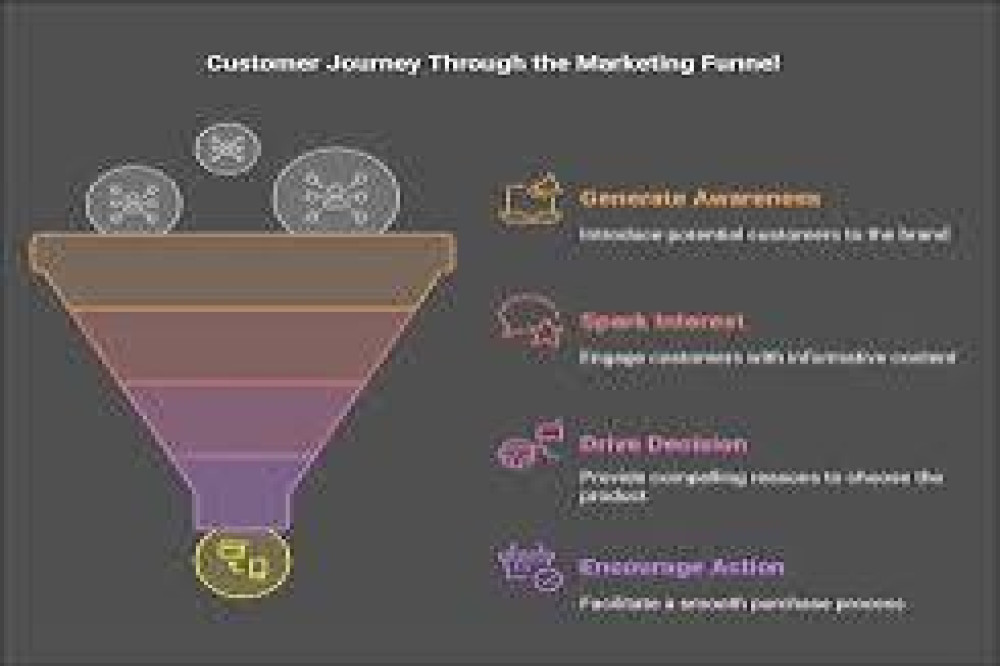
Funnels Are No Longer Linear. Neither Are People.
There was a time when funnels were simple. You attracted attention, captured a lead, nurtured interest, pushed toward conversion, and hoped loyalty followed. The journey moved in one direction, like water flowing downhill. Businesses built pages, emails, and ads around this assumption, that customers behaved predictably, rationally, and in sequence.
That era is gone.
Today’s customers don’t move in straight lines. They jump between platforms, pause mid-journey, compare silently, return unexpectedly, and decide emotionally. They research at midnight, buy at noon, abandon at checkout, and come back weeks later after one conversation or one moment of clarity.
And yet, many businesses still force these fluid humans into rigid funnels.
The result? Missed opportunities, broken experiences, and growth that feels harder than it should.
The future of funnels isn’t about pushing people forward. It’s about building adaptive paths that respond, learn, and think.
Why Traditional Funnels Are Failing Modern Businesses
Traditional funnels assume one truth that no longer exists: control.
They assume businesses control the pace, the order, and the narrative. But in reality, customers control when they engage, how they explore, and what convinces them. Funnels that don’t adapt to this reality feel mechanical and disconnected.
When a customer is forced down a path that doesn’t reflect their intent, friction appears. Emails feel irrelevant. CTAs feel rushed. Offers feel mistimed. Instead of guiding, the funnel pressures, and pressure kills trust.
The deeper issue is that static funnels treat customers like segments instead of signals. They group people based on who they were rather than responding to who they are becoming in real time.
Modern competition doesn’t reward volume anymore. It rewards relevance.
And relevance requires intelligence.
Funnels Are Becoming Systems, Not Sequences
The most successful digital brands have quietly abandoned the idea of funnels as fixed pipelines. Instead, they’ve begun designing customer ecosystems, adaptive environments where every interaction informs the next.
In these systems, behavior matters more than assumptions. A click, a pause, a scroll, a revisit, each action becomes a signal. AI and automation translate these signals into responses, adjusting content, messaging, and timing dynamically.
The funnel stops being a rigid map and becomes a living path.
Instead of asking, “Where should we push this customer next?” The system asks, “What does this customer need now?”
That shift changes everything.
Designing Funnels That Think, Adapt, and Evolve
An adaptive funnel begins with humility. It accepts that businesses don’t know everything upfront, and that learning must be continuous.
At DigTize, we design funnels as decision-support systems, not persuasion machines. Every touchpoint is built to observe, learn, and respond. Content adapts based on engagement depth. Offers change based on readiness signals. Messaging adjusts to emotional context.
AI doesn’t replace strategy here, it amplifies it.
By analyzing behavioral patterns across channels, intelligent funnels detect intent long before conversion. They recognize hesitation without panic. They slow down when trust is still forming and accelerate when confidence is high.
Instead of pushing harder, they become smarter.
This is how funnels stop feeling sales-driven and start feeling customer-aligned.
Personalization Without Overreach
One of the biggest fears around intelligent funnels is intrusion. Nobody wants to feel watched. Nobody wants a brand that knows too much, too fast.
Adaptive funnels succeed because they practice restraint.
They personalize progressively. Early interactions stay broad and helpful. As trust builds, experiences become more tailored. The system earns intimacy instead of assuming it.
This creates a subtle but powerful effect: customers feel understood rather than targeted.
When personalization respects pace, it strengthens loyalty instead of triggering resistance.
What Adaptive Funnels Unlock for Growth
When funnels think for themselves, growth stops being reactive.
Marketing becomes efficient instead of loud. Sales becomes consultative instead of forceful. Customer experience becomes consistent across touchpoints because intelligence connects everything behind the scenes.
Teams stop guessing. Data becomes guidance. Decisions feel lighter.
Most importantly, customers stop feeling sold to, and start feeling supported.
That emotional shift is where long-term growth lives.
Adaptive funnels don’t just convert better.
They retain better.
They learn faster.
They scale smoother.
And over time, they become a competitive advantage that’s almost impossible to copy, because intelligence compounds.
Build Funnels That Learn, Not Just Convert
The future belongs to businesses that stop forcing journeys and start designing intelligence.
Funnels shouldn’t feel like traps. They should feel like pathways.
At DigTize, we build adaptive funnel ecosystems that evolve with your audience, align with your vision, and scale without sacrificing trust. Systems that think. Paths that adjust. Growth that feels natural instead of stressful.
If your funnel feels heavy, rigid, or outdated, it’s not broken, it’s just no longer alive.
And living systems are the future.
Connect with DigTize, where funnels evolve into intelligent customer journeys built to grow, learn, and last.
Written by: Ayomiposi Inawole